The land that is now Indian Creek and Sleepy Hollow was part of a land grant from William Penn to James McConnell in 1764. The Indians who preceded this were, at first, the Susquehannocks who were defeated by the Iroquois. At the time of the land grant, the Shawnee were settled here, accepted by the Iroquois. In 1801 John Rupp bought our portion of the land grant followed by several other owners. In 1859 Benjamin Erb built the farmhouse at 323 Indian Creek Drive. Benjamin Erb II built the farmhouse now on 221 Cherokee Drive in 1872. Benjamin Erb II and his brother built a covered bridge where our bridge is now in order to provide transportation to the Good Hope Grist Mill, previously Rupp’s Mill. The current Erb’s bridge was built in 1961.
After several intervening owners, Loy Hempt (of the Hempt Brothers) bought what is now the Indian Creek and Sleepy Hollow property including the farmhouse on 221 Cherokee in 1959. The farm and barn were used for some of the famous Hempt race and polo horses. When Pennsylvania Power & Light Corporation took a right-of-way through his land in 1964, Hempt sold, to a subsidiary of PPL, all but his home and barn and 5 acres for his horses. A subsidiary of PPL commissioned Vernon Sealover to build the pool complex in 1969.
In 1983, PPL sold the Indian Creek land to a joint venture of builders, including Vernon Sealover, John Prahl, and three others. They continued to build on Shasta, Beaver, Pawnee, and Indian Creek. Vernon Sealover lived at this time in 323 Indian Creek. In 1987 he bought the land which had been the Radabaugh farm from the PPL subsidiary. This property became Sleepy Hollow.
When I moved to Indian Creek from St. Louis in 1976, the pool was free, but shortly thereafter we paid dues to the Service Development Corporation. When this entity decided to divest itself of the pool complex in 1984, residents who wanted the pool to continue paid a capital price of $200 and annual dues of $150. My children took lessons there, joined the swim and diving teams, and generally spent summer days there. Years later, I joined again so that my grandchildren could have that experience. The pool meant that we had the opportunity to form friendships with others in this unique community. Until a few years ago, I paddled with the kids in the annual “Anything That Floats” race on Memorial Day. When we started, no one had a kayak, now they color the creek all summer.
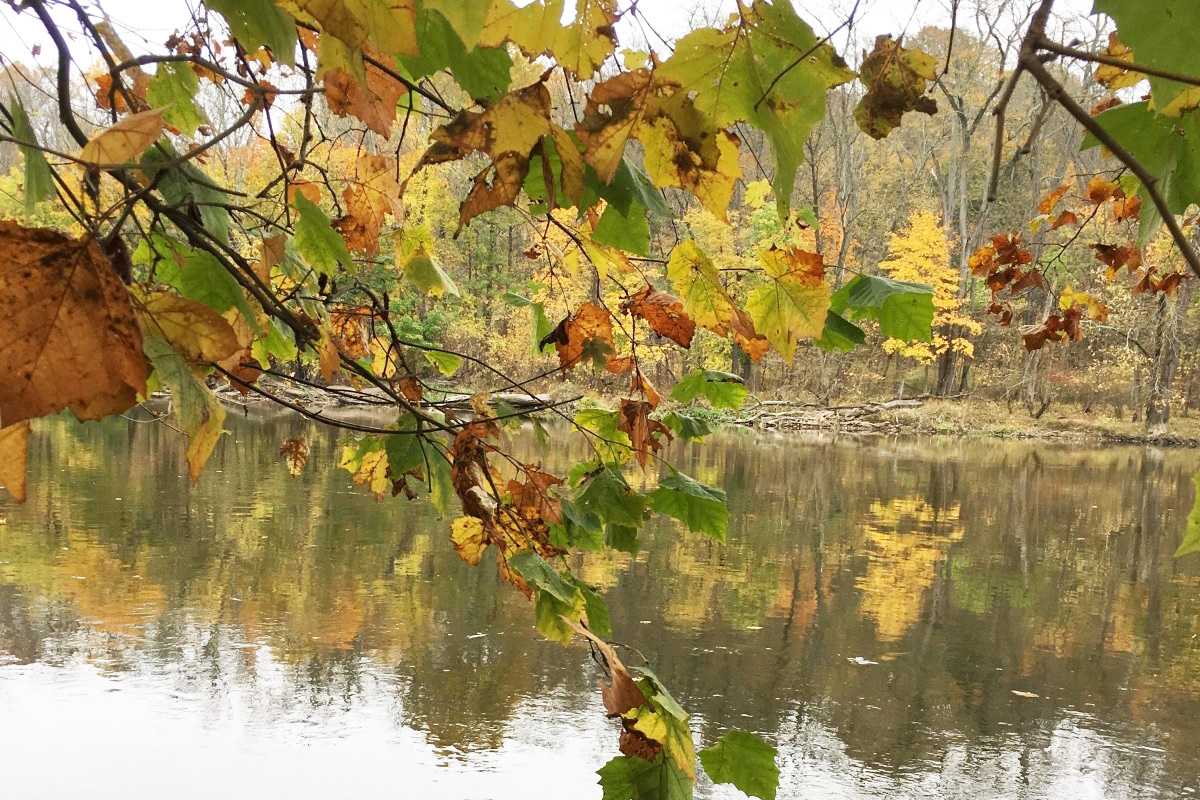
In the 44 years I have lived here, the Conodoguinet Creek had been my joy. My children used to canoe across and build forts on the other side of the creek. They camped out there, and speak of great horned owls who flew near them, their huge wing spans causing shivers. In those early days, the creek froze most winters, and we could ice skate. I remember one winter when the ice was so thick the kids built a bonfire on it for roasting marshmallows. When we first moved here, many more fish lived in the creek, and muskrats lived along the banks. On a positive note, then we never saw eagles. Now we sometimes have nesting pairs. All who live near the creek hear barred owls all summer long, and watch the egrets and herons and the neighborhood kids wading.